
Employer Benefits Implementation: What Every Business Owner Must Know
Employer Benefits Implementation: Employers exploring tax-advantaged employee benefit programs often focus on potential savings first. However, long-term success depends on something equally important: compliance. IRS-compliant employer benefits must be properly structured, documented, administered, and maintained to help withstand regulatory scrutiny while supporting both employer and employee goals.
Whether an organization is evaluating a Section 125 plan, supplemental health benefits, payroll tax reduction opportunities, or broader employee benefit strategies, understanding compliance requirements can help reduce risk and improve confidence in the chosen approach.
This guide explains what IRS-compliant employer benefits look like in practice and what employers should evaluate before implementing any tax-advantaged benefit strategy.
Why Employer Benefits Implementation Requires Planning
Many employers assume benefit implementation begins after selecting a plan. In reality, the most important work often happens before any program launches.
Every workforce is different. Company size, payroll structure, employee demographics, participation goals, existing benefits, and administrative resources all influence which benefit approach may be appropriate.
Rather than adopting a one-size-fits-all solution, employers should compare available options and determine which combination of benefits best aligns with organizational objectives.
For many organizations, implementation planning focuses on:
- Employee benefit value
- Administrative simplicity
- Payroll integration requirements
- Compliance considerations
- Long-term sustainability
- Potential employer payroll tax savings opportunities
- Employee participation expectations
A thoughtful implementation process helps reduce disruptions and improves the likelihood of a successful rollout.
Phase 1: Workforce and Eligibility Assessment
Before implementing any benefits program, employers should evaluate their workforce.
This assessment helps determine which benefits may provide the greatest value while identifying potential participation opportunities.
Key considerations include:
Employee Demographics
Employers should analyze:
- Number of W-2 employees
- Full-time versus part-time staff
- Average compensation levels
- Geographic workforce distribution
- Existing benefit participation rates
Existing Benefit Programs
Many organizations already offer some level of benefits coverage. Evaluating current offerings helps identify gaps and opportunities.
Examples include:
- Health coverage
- Supplemental health benefits
- Wellness programs
- Voluntary benefits
- Retirement plans
- Flexible spending arrangements
Savings Objectives
Employers often have multiple goals beyond employee satisfaction.
These may include:
- Exploring employer payroll tax savings opportunities
- Evaluating potential FICA tax savings
- Assessing payroll tax reduction strategies
- Supporting employee financial wellness
- Improving retention and recruitment
A thorough workforce assessment creates the foundation for every implementation decision that follows.
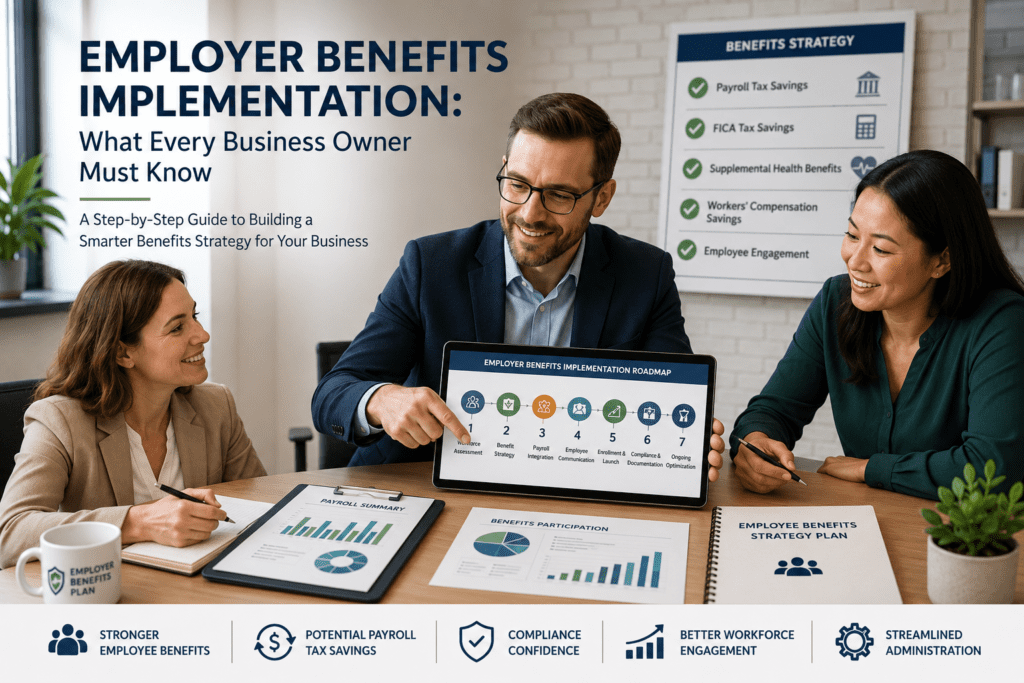
Phase 2: Comparing Benefit Structures
Once workforce needs are identified, employers can begin comparing available benefit structures.
This phase is critical because not all benefits programs are designed to accomplish the same objectives.
Some employers evaluate traditional benefit offerings while others explore IRS-recognized frameworks such as a Section 125 plan or cafeteria plan structure.
Relevant internal resources:
- Section 125 plan and cafeteria plan information:
https://employerbenefitplan.com/faqs/
Depending on plan design and employee participation, certain benefit structures may help employers identify opportunities for:
- FICA tax savings
- Payroll tax reduction
- Employee benefit enhancement
- Administrative efficiencies
Employers should compare options based on workforce needs rather than selecting solutions solely based on marketing claims or generalized savings projections.
Phase 3: Payroll Integration and Administrative Setup
After selecting an appropriate benefits strategy, implementation moves into payroll coordination.
Payroll integration is one of the most important operational components of a successful rollout.
Employers should ensure that payroll systems can accurately:
- Process benefit deductions
- Track employee elections
- Maintain payroll records
- Support reporting requirements
- Handle enrollment changes
- Manage payroll coding and classifications
Proper setup helps reduce administrative errors while improving the employee experience.
Why Payroll Coordination Matters
Benefits administration and payroll administration often work together.
When systems are properly aligned, employers may experience:
- Fewer processing errors
- Improved reporting consistency
- Simplified administration
- Better employee communication
- Greater operational efficiency
Organizations considering benefit-related tax savings strategies should ensure payroll processes support the selected program design.

Phase 4: Employee Communication and Education
Even the most carefully designed benefits program can underperform if employees do not understand it.
Employee communication is often one of the most overlooked aspects of employer benefits implementation.
Employees should receive clear explanations regarding:
- Available benefits
- Enrollment deadlines
- Participation requirements
- Election procedures
- Potential employee value
- Ongoing support resources
Building Employee Confidence
Successful communication strategies often include:
- Enrollment guides
- FAQ documents
- Educational meetings
- Email campaigns
- Payroll communication materials
When employees understand how benefits work, participation rates often improve and administrative questions decrease.
Phase 5: Enrollment and Program Launch
Once communication materials are prepared, employers can begin enrollment.
A structured enrollment process helps reduce confusion and improves accuracy.
Employers should establish:
- Enrollment timelines
- Election procedures
- Required documentation
- Employee acknowledgements
- Data verification procedures
A controlled launch process minimizes disruptions while helping employees make informed decisions.
Phase 6: Compliance Documentation and Recordkeeping
Ongoing documentation and recordkeeping remain important components of administration.
Depending on program structure, employers may need to maintain records relating to:
- Employee elections
- Enrollment documentation
- Payroll records
- Plan documentation
- Administrative procedures
- Compliance-related materials
Proper documentation supports organizational consistency and operational oversight.
Avoiding Common Documentation Mistakes
Common implementation challenges include:
- Missing enrollment records
- Inconsistent payroll processing
- Poor employee communication records
- Outdated administrative procedures
Developing documentation processes from the beginning can help reduce these risks.
Phase 7: Ongoing Monitoring and Optimization
Benefits implementation should be viewed as an ongoing process rather than a one-time event.
As organizations grow, workforce needs may change.
Periodic evaluation allows employers to:
- Analyze participation trends
- Assess employee feedback
- Compare benefit utilization
- Review payroll processes
- Explore additional savings opportunities
- Evaluate supplemental health benefits
- Assess workers’ compensation savings strategies
Useful resources:
- Employer payroll tax savings:
https://employerbenefitplan.com/ - FICA tax savings:
https://employerbenefitplan.com/fica-tax-savings-comparison-which-strategy-pays-most/ - Supplemental health benefits:
https://employerbenefitplan.com/how-to-add-supplemental-benefits-to-your-payroll-system/ - Workers’ comp savings:
https://employerbenefitplan.com/reduce-workers-comp-costs-8-proven-employer-strategies/
Ongoing optimization helps employers adapt their benefits strategy as workforce needs evolve.

Common Employer Benefits Implementation Mistakes
Many implementation challenges stem from avoidable mistakes.
These often include:
- Selecting a solution before evaluating workforce needs
- Failing to coordinate payroll integration
- Providing insufficient employee education
- Underestimating documentation requirements
- Ignoring participation considerations
- Overlooking long-term administration needs
Employers that follow a structured implementation process are generally better positioned to achieve their workforce and operational objectives.
Why a Savings Estimate Is Often the Best First Step
Before implementing any benefits strategy, employers often want to understand whether a particular approach aligns with their workforce, payroll structure, and business goals.
Rather than committing to a specific plan immediately, many organizations begin by comparing available options and evaluating potential outcomes.
This consultation-first approach allows employers to:
- Compare benefit structures
- Assess workforce fit
- Evaluate implementation requirements
- Identify potential payroll-related savings opportunities
- Understand employee participation considerations
- Explore long-term strategy options
Employer Benefits Plan helps employers evaluate these factors before implementation decisions are made, providing a practical starting point for organizations seeking clarity on available options.
Conclusion
Employer benefits implementation involves much more than selecting a benefits package. Successful programs typically begin with workforce analysis, continue through benefits evaluation and payroll integration, and rely on effective employee communication and ongoing documentation.
When employers take a structured approach, they can reduce implementation challenges, improve employee understanding, and evaluate opportunities that align with both workforce needs and organizational goals.
Businesses considering a new benefits strategy should begin by comparing available options and understanding how implementation requirements may affect their organization before making long-term commitments.
Frequently Asked Questions About Employer Benefits Implementation
The first step is usually evaluating workforce demographics, payroll structure, existing benefits, participation goals, and potential savings opportunities. This assessment helps employers determine which benefits strategy may be most appropriate for their organization.
Depending on plan design, employee participation, and eligibility requirements, certain benefit structures may create opportunities for employer payroll tax savings and FICA tax savings. Employers should evaluate potential savings carefully before implementing any program.
Yes. A Section 125 plan or cafeteria plan generally requires payroll coordination to properly process employee elections, deductions, and reporting requirements. Accurate payroll integration is an important part of successful implementation.
Documentation requirements vary by benefit structure but may include plan documents, employee election forms, enrollment records, payroll records, communication materials, and administrative procedures. Employers should maintain organized records throughout the implementation process.
A savings estimate can help employers compare benefit options, evaluate potential payroll-related savings opportunities, understand implementation requirements, and determine whether a particular benefits strategy aligns with their workforce and business objectives before making a long-term commitment.