
Compliance & Implementation for Supplemental Health Benefits
Employer Benefits Plan helps employers move from initial consultation to organized implementation support with a clear, compliance-conscious process. For qualified employers, the strategy involves supplemental health benefits, payroll coordination, employee communication, plan documentation, and evaluation of how the structure fits the employer’s existing setup. We help employers identify what happens after the savings consultation, how implementation is coordinated, and how the process supports both employer savings goals and employee benefit value.
Implementation Built Around Employer Clarity
A successful benefits strategy should be easy for employers to reognize before it is implemented. Employer Benefits Plan helps business owners, CFOs, HR leaders, and payroll decision-makers evaluate the key steps involved in moving forward. This includes evaluating the employer’s workforce, current payroll setup, existing benefits structure, and whether the opportunity appears to be a fit. The implementation process is designed to provide clear next steps. Employers should know what information is needed, who is involved, and how the process moves from consultation to setup.

Supplemental Health Benefits Coordination
The strategy is built around supplemental health benefits designed to add value for employees while supporting the employer’s broader savings goals. For qualified employers, supplemental health benefits are designed to help strengthen the overall benefits experience without automatically replacing the employer’s current health benefits plan. The consultation helps determine how the supplemental benefits strategy fits alongside existing payroll, current benefits, employee communication needs, and the employer’s business structure.

Section 125 Cafeteria Plan Review
Some employers search for this type of structure as a section 125 cafeteria plan, 125 cafeteria plan, or cafeteria 125 plan. Employer Benefits Plan keeps the explanation simple. The purpose of the review is to help employers understand how the structure may work, what documentation may be needed, and how implementation should be coordinated before moving forward. A Section 125 cafeteria plan strategy should be handled carefully. Employers should rely on qualified tax, legal, payroll, benefits, or administrative professionals when finalizing plan documents, compliance requirements, and implementation details.

Tax Advantaged Program Structure
A tax-advantaged program should be evaluated with attention to documentation, payroll coordination, employee participation, and ongoing administration. Employer Benefits Plan helps employers get clarity on general implementation path and coordinates next steps when the employer appears to be a fit. We identify potential savings and help employers move forward with a structure that is organized, explainable, and supported by the right implementation process.
Payroll Coordination and Savings Consultation
Implementation requires coordination with the employer’s payroll process so that the benefit strategy is handled correctly. As part of the overall consultation, employers evaluates potential employer payroll tax savings, employer tax savings, fica savings, and fica tax savings. Actual results vary based on employee participation, payroll structure, state rules, business details, and implementation requirements. Employer Benefits Plan helps employers understand the process before moving forward so payroll coordination is not treated as an after thought.

Tax-Code Framework Behind Advanced Section 125 Benefit Strategies
Employer Benefits Plan helps W-2 employers compare basic Section 125 cafeteria plan options with advanced Section 125 benefit strategies designed to support employer payroll tax savings, FICA savings, workers’ comp savings, supplemental health benefits, and employee wellness benefit value.
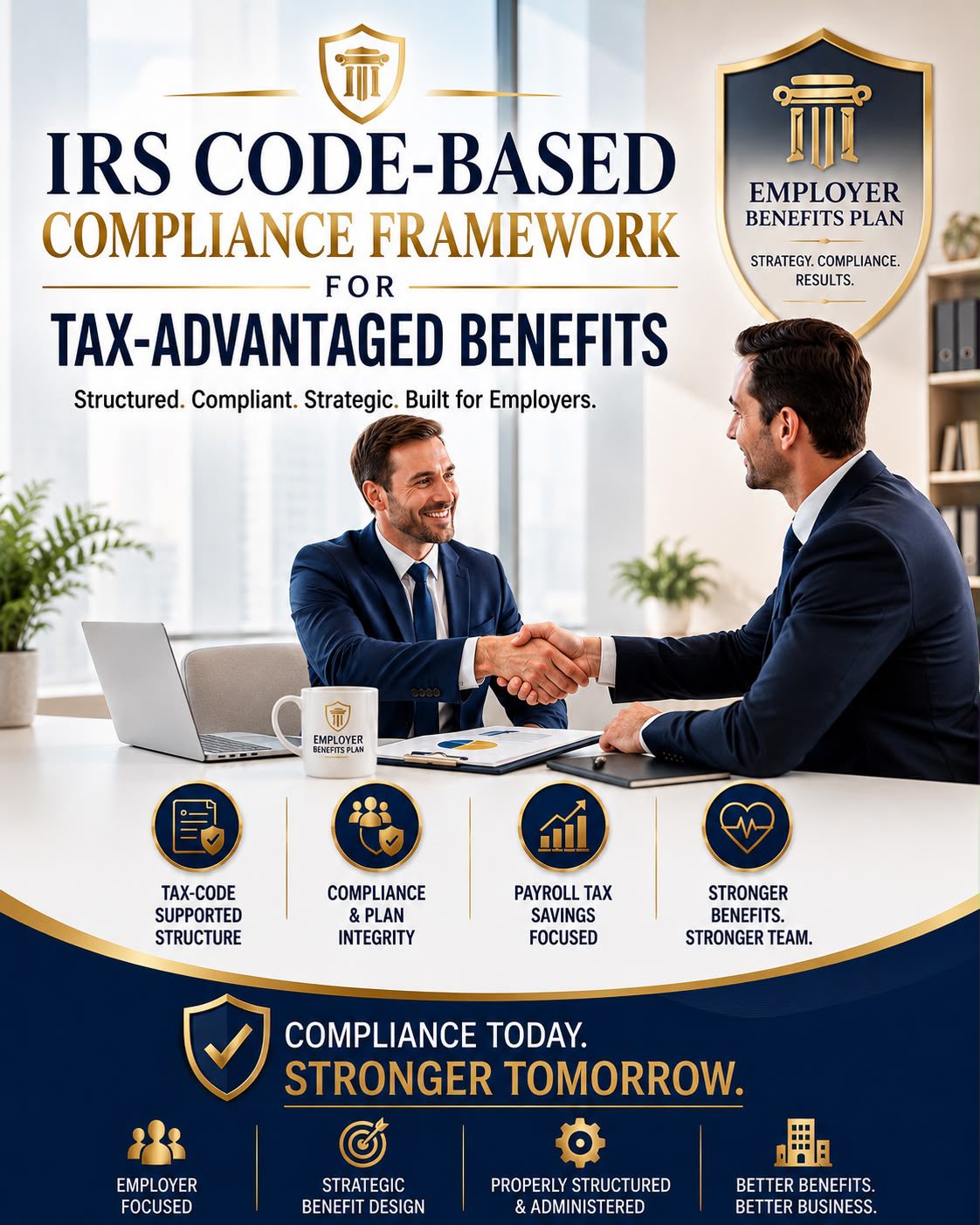
Advanced Section 125 benefit strategies are structured around tax-code-supported benefit provisions, including Internal Revenue Code Sections 125, 105(b), 106(a), and 213(d), depending on the employer’s plan design, documentation, payroll structure, workforce, and implementation.
These provisions are commonly associated with cafeteria plan elections, employer-sponsored health benefits, medical reimbursement arrangements, qualified medical care expenses, and supplemental health benefit structures. When properly structured, documented, implemented, and administered, the strategy is designed to support payroll tax savings while strengthening the overall employee benefits package.
Some employers, brokers, and payroll professionals also research these types of strategies using terms such as SIMRP, SIMERP, or WIMPER. Employer Benefits Plan uses a consultation-first process to help employers understand how the structure works, determine fit, and compare basic cafeteria plan options with more advanced tax-advantaged benefit strategies.
Employer Benefits Plan does not provide legal, tax, payroll, insurance, or benefits administration advice. Employers should work with qualified legal, tax, payroll, insurance, and benefits professionals before implementing any tax-advantaged benefit structure.
Workers Comp Savings Considerations
Some employers also assess whether the strategy supports workers’ comp savings or workers comp cost reduction. Because workers’ compensation costs are often connected to payroll-related factors, qualified employers are able to evaluate this opportunity as part of the broader implementation consultation. Actual workers’ compensation results vary based on state rules, classification codes, insurance carrier requirements, payroll structure, employee participation, and employer-specific details.

Employee Communication and Onboarding
Clear employee communication is an important part of implementation. Employees should be clear about what is being offered, how the supplemental benefits work, and what steps they need to takeduring onboarding. A clear rollout helps reduce confusion and support stronger employee participation. For employers, better communication is designed to support employee wellness benefits, employee engagement, and a stronger workplace benefits experience.

Partner Implementation Specialist Support
If the employer chooses to move forward, Employer Benefits Plan helps coordinate next steps with a Partner Implementation Specialist. The Partner Implementation Specialist helps guide setup, onboarding, employer coordination, implementation support, and next-step communication. This allows employers to move forward with a clearer process instead of trying to manage every implementation detail alone.
What Is Covered During Implementation?
Implementation needs vary by employer, but the consultation includes:
- Company and workforce information
- W-2 employee structure
- Current payroll setup
- Existing benefits structure
- Supplemental health benefits strategy
- Employee communication needs
- Payroll coordination requirements
- Potential FICA savings consultation
- Workers’ comp savings consultation
- Partner Implementation Specialist coordination
- Next steps before launch
The purpose is to help the employer recognize what needs to happen before the strategy is implemented.

Compliance-Conscious, Not One-Size-Fits-All
Employer Benefits Plan does not present this as a one-size-fits-all solution. Each employer should be assessed based on workforce size, payroll structure, benefit goals, employee participation, state rules, carrier requirements, and implementation needs. The process is designed to help employers evaluate whether the opportunity is appropriate before moving forward. Savings vary by company, and the final estimate depends on the employer’s specific workforce and payroll details.
Ready to Consult about Implementation for Your Business
Request an employer benefits consultation to see whether your business is a fit for supplemental health benefits, a tax advantaged program structure, potential FICA savings, workers comp savings, and implementation support.