
How to add supplemental benefits to your payroll system
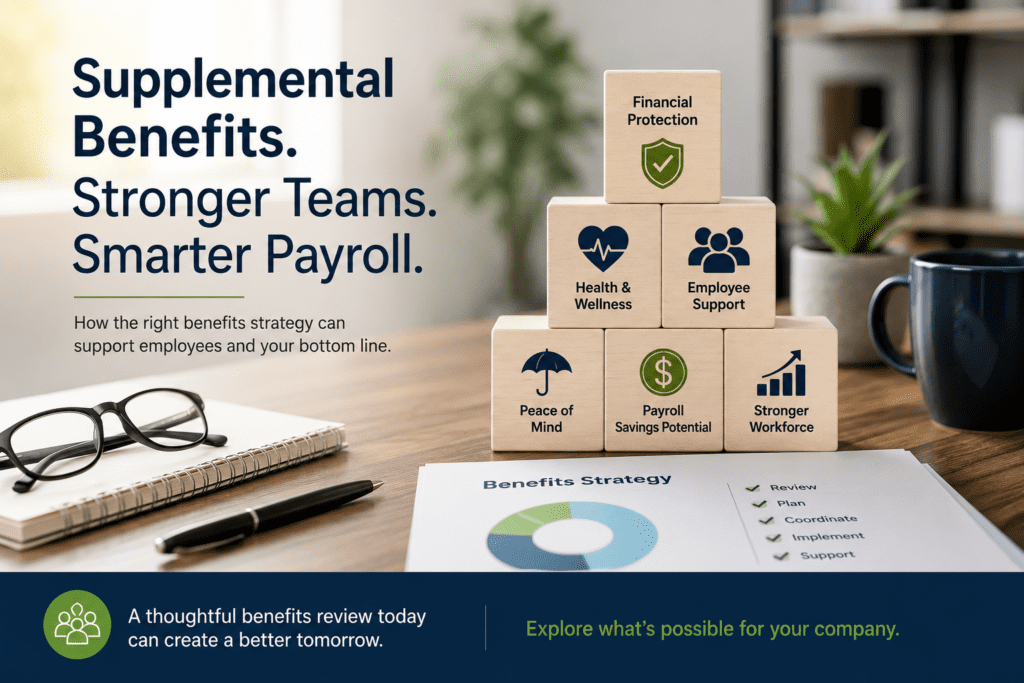
Adding supplemental benefits to payroll is not just a software task. Employers should review how any benefits strategy fits with their workforce, payroll system, employee communication, plan documentation, and compliance process before making changes.
For some employers, a properly structured benefits strategy may support payroll-related savings while adding employee benefit value. The exact outcome depends on the employer’s workforce, participation, payroll setup, plan design, and implementation details.
Employer Benefits Plan helps employers review whether a supplemental benefits and payroll-savings strategy may be worth exploring. This article explains the key items employers should understand before moving forward and why a professional review is important before any payroll or plan changes are made.
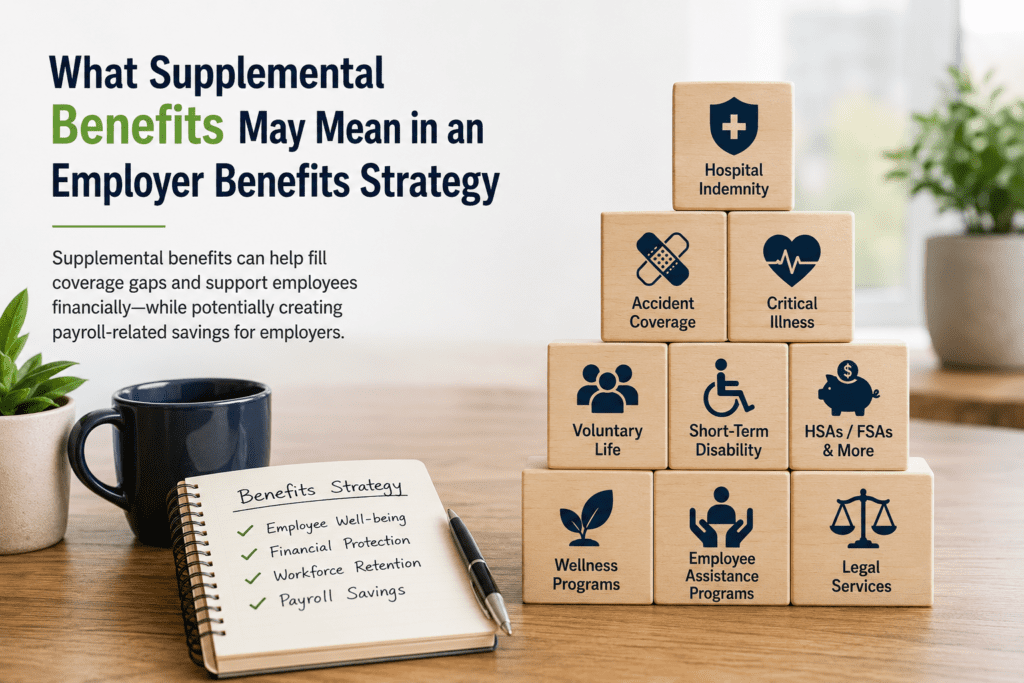
What Supplemental Benefits May Mean in an Employer Benefits Strategy
The term “supplemental benefits” can cover several different types of employee benefit offerings that may sit alongside an employer’s existing compensation and benefits structure.
These benefits may include:
- Hospital indemnity coverage
- Accident coverage
- Critical illness coverage
- Voluntary life insurance
- Short-term disability coverage
- Health Savings Accounts (HSAs)
- Flexible Spending Accounts (FSAs)
- Dependent care accounts
- Employee assistance programs
- Wellness-related offerings
For many employers, supplemental benefits are reviewed as an added layer that may help employees address coverage gaps or out-of-pocket expenses that a primary group health plan may not fully cover.
Depending on the structure and participation level, some strategies may also support potential payroll-related savings. However, savings and payroll treatment vary by employer and should be reviewed with qualified professionals before any decisions are made.
How Supplemental Benefits May Work Alongside Existing Benefits
In many cases, supplemental benefits are reviewed as an addition to an employer’s existing group insurance setup rather than a replacement for the current plan.
Employers may choose to explore supplemental offerings that complement their primary benefits package while keeping existing carrier relationships and payroll structures largely intact.
For example:
- Hospital indemnity coverage may provide fixed payments related to hospital stays
- Accident coverage may help employees with unexpected injury-related expenses
- Critical illness coverage may provide lump-sum benefits tied to qualifying diagnoses
How these benefits interact with payroll deductions, employee elections, plan documentation, and reporting depends on the employer’s setup and the professionals involved in implementation.
Employer Benefits Plan helps employers review whether this type of strategy may fit their workforce and what areas may need additional review before moving forward.
Payroll Coordination Items Employers Should Review
Before adding supplemental benefits to payroll, employers should review how the benefits may interact with payroll deductions, employee elections, plan documents, and ongoing administration.
Payroll coordination may involve the employer’s payroll provider, benefits administrator, tax professional, legal advisor, or implementation partner.
Employer Benefits Plan does not replace those professionals. The purpose of the review is to help the employer understand whether the strategy may fit the company and what questions should be reviewed before moving forward.
Implementation details may vary depending on:
- Payroll platform
- Plan structure
- Employee participation
- Benefit types selected
- Existing payroll and accounting workflows
A professional review can help employers better understand the coordination process before any changes are made.
Payroll Platform Coordination Considerations
Many employers review how supplemental benefits may coordinate with platforms such as:
- ADP Workforce Now
- Gusto
- QuickBooks Payroll
- Paychex Flex
Each payroll platform may handle deductions, reporting, employee elections, and benefit workflows differently.
Because payroll systems and requirements can vary, employers should work with the appropriate payroll, tax, legal, or administrative professionals before finalizing any setup or changes.
Tax and Payroll Treatment Should Be Confirmed by Qualified Professionals
Employee Enrollment and Documentation Considerations
Employers considering supplemental benefits should also review employee communication, enrollment procedures, and documentation requirements before implementation.
Depending on the structure of the strategy, employers may need to review:
- Employee election procedures
- Payroll deduction authorizations
- Benefit summaries and notices
- Plan documentation
- Ongoing administration responsibilities
- Employee education materials
Clear communication can help employees better understand the purpose of supplemental benefits and how they may fit alongside existing coverage.
Appropriate legal, payroll, benefits, or administrative professionals should be consulted regarding any documentation or compliance-related questions.
Pre-Launch Review Before Implementation
Before implementation, employers should review the key details that may affect payroll coordination, employee communication, plan documentation, and administration.
A pre-launch review can help reduce confusion and support a smoother implementation process before moving forward.
Before moving forward, employers may want to review:
- Whether the strategy fits the company’s workforce
- How employee participation may affect potential savings
- How payroll coordination would be handled
- What plan documents or employee notices may be needed
- How employees would be educated
- What professionals should be involved before implementation
- How ongoing administration would be managed
Because every employer’s situation is different, implementation requirements and outcomes may vary.
Ongoing Review and Administration Considerations
After implementation, employers may still need to periodically review payroll coordination, employee participation, plan administration, and communication processes.
Ongoing review may help employers:
- Monitor participation trends
- Review payroll coordination workflows
- Update employee communications when needed
- Coordinate with implementation or administrative professionals
- Review plan-related updates or reporting considerations
The level of administration and review required may vary depending on the employer’s structure and selected benefits strategy.
Educational Disclaimer
The Bottom Line on Supplemental Benefits and Payroll
Review Whether This Strategy May Fit Your Workforce
Employer Benefits Plan helps employers review whether a supplemental benefits and payroll-savings strategy may support potential savings and employee benefit value.